The King's Jest
- Role
- PM · UX Designer
- Timeline
- 2025–2026
- Platform
- iOS & Android
- Team
- 2 devs · 2 illustrators · 1 PM/designer
My role
I came in as Product Designer, working through discovery, mapping the flows, and prototyping the screens for the game's first version. As development went on I moved into Product Manager and UX Designer, shifting toward the strategic side of the product: running the team, holding the deadlines, and deciding what was in scope.
I worked on the flows, ran the tests, analysed the feedback, and made product calls grounded in data and usability, alongside setting the product vision and business model — which is why this case goes lighter on interface decisions than my others.
Context
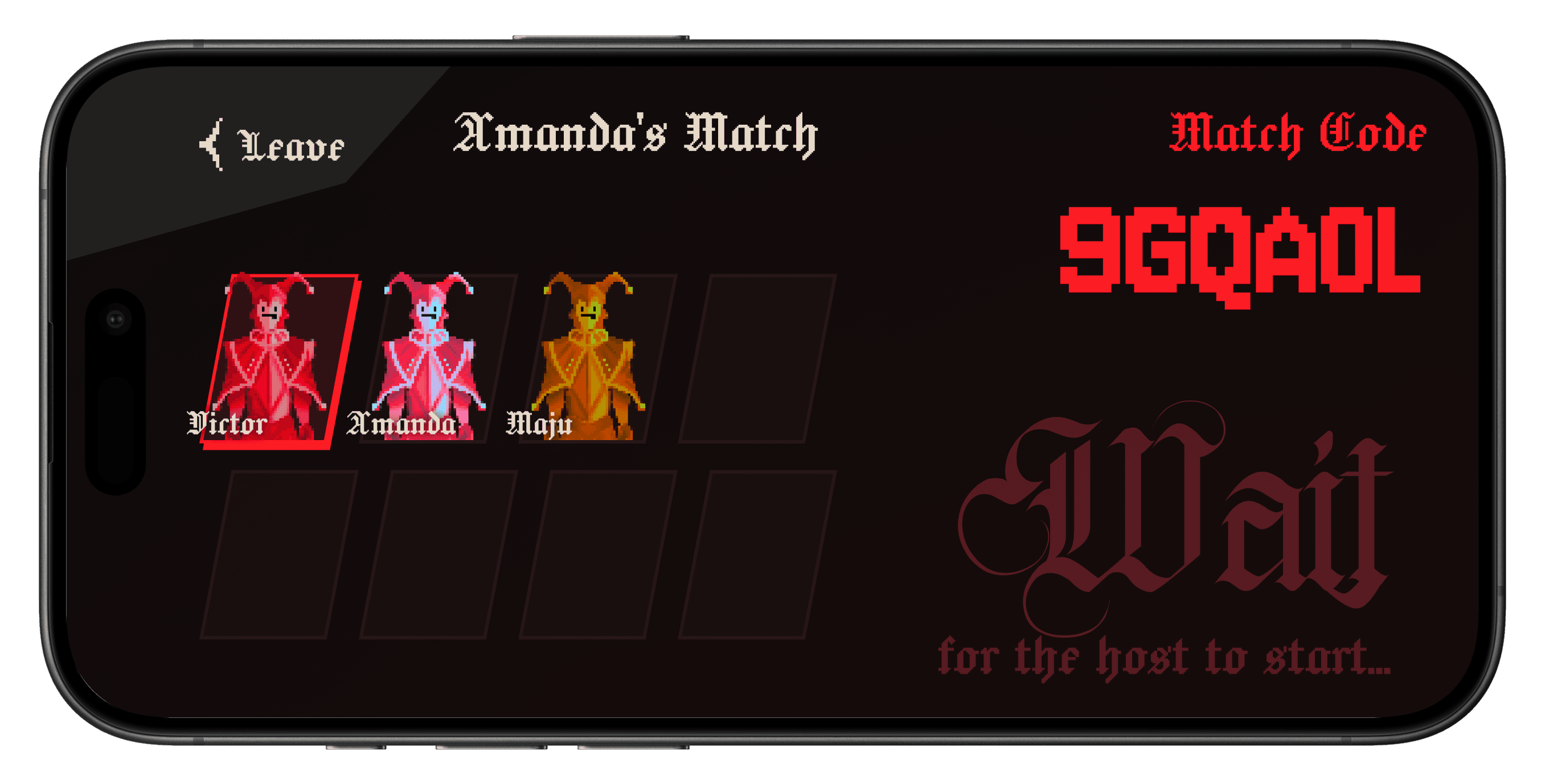
The King's Jest is a multiplayer mobile party game where players compete in short rounds, using the phone's own motion sensors to move and dodge obstacles.
The project was built during a cycle at the Apple Developer Academy, where the team had just three months to conceive, build, and ship a game on the App Store — one whose mechanic or dynamic had to be genuinely different from what was already out there.
Trade-offs
It needed a story
Beyond being fun, the game would be pitched to potential investors, which meant building a strong, legible narrative to hold the entertainment experience together.
Core mechanic first
We prioritised shipping one complete, playable level in three months — enough to validate the core mechanic, even if it fell short of a full party game experience.
A domain none of us knew
We chose to build a game with no prior game design experience on the team, taking on the risk of unfamiliar territory as part of the process.
Discovery and direction
Starting assumptions
From the very first meeting, the team settled on Core Motion — Swift's native kit for reading the phone's movement — as the basis of the mechanic, because of how much it could set the game apart. To push that further and give the pitch a strong story, we went with local multiplayer, on the assumption that having players physically together would make the experience land harder.
- •
Physical movement would be the core mechanic
- •
Local multiplayer would carry both the narrative and the social experience
- •
Short, casual rounds would suit the moments people play in
- •
Being in the same room would spark spontaneous reactions and social interaction
Benchmark
The competitive analysis followed two threads: sensor-based mechanics and the party game format. For the mechanic we looked at WarioWare and 1-2-Switch, which use sensors to build fast, approachable challenges. For the format we looked at well-known party games — Pico Park, Fall Guys, Mario Party — which live on short rounds, varied dynamics, and strong in-person social play.
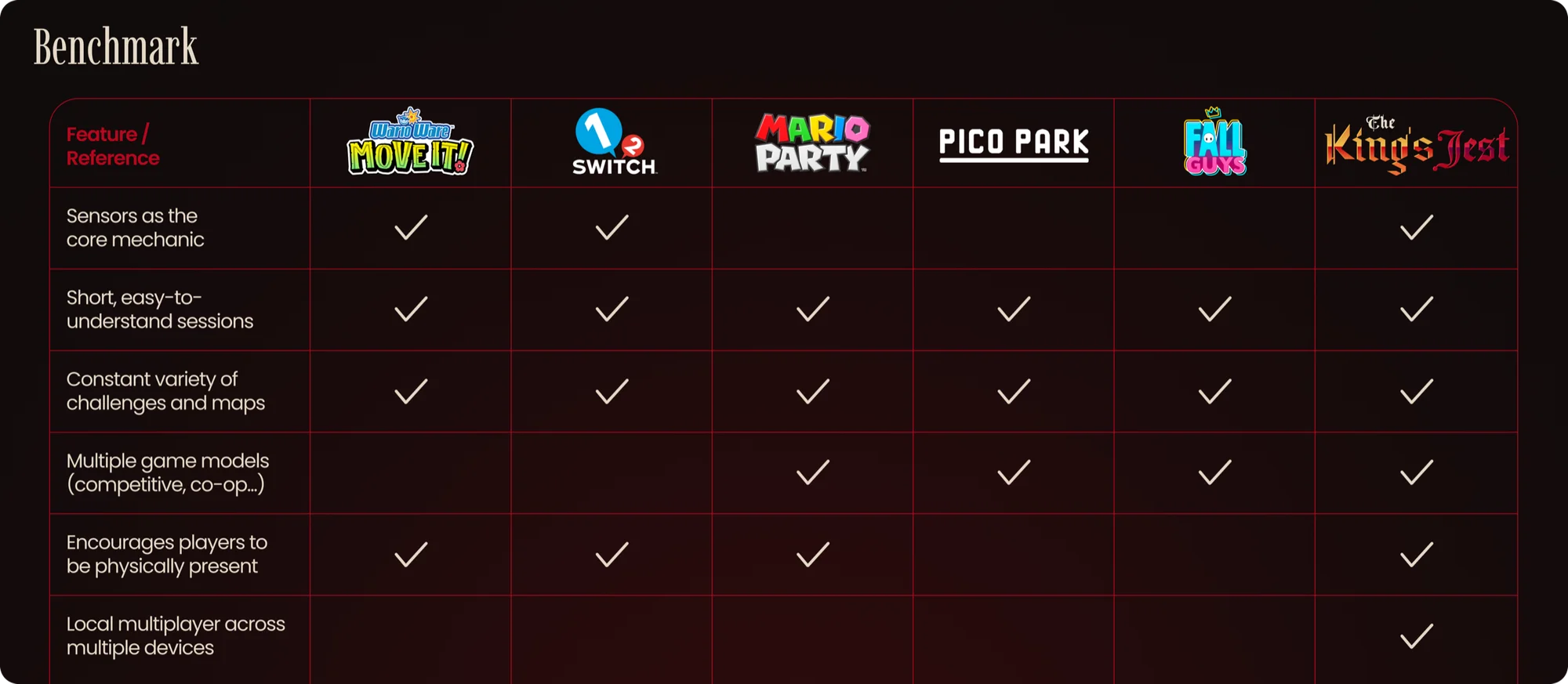
Among Us came up as a successful mobile party game, but it stayed out of the benchmark: it did not meet the core criteria we had set for the project.
Audience and behaviour hypotheses
At this stage the decisions rested mostly on assumptions, and we defined the audience from the context we imagined people playing in: teenagers and adults, 14 to 30 → who like being around their friends in person → and are after light, competitive fun.
Because this was an entertainment product, there was no way to know whether the mechanic, the format, or the audience would land until the MVP existed. So during discovery we wrote those unknowns down as hypotheses, to be tested against the game in real use:
- 01
The game would appeal to a broad, varied audience
- 02
The motion-based mechanic would land as a pleasant surprise
- 03
Local multiplayer would be the differentiator and the product's story
- 04
The game would drive social interaction and engagement between friends
The MVP
Storytelling
We set a simple narrative frame to give the game an identity without getting in the way of the gameplay, using the story only to create a connection and give the challenges a context.
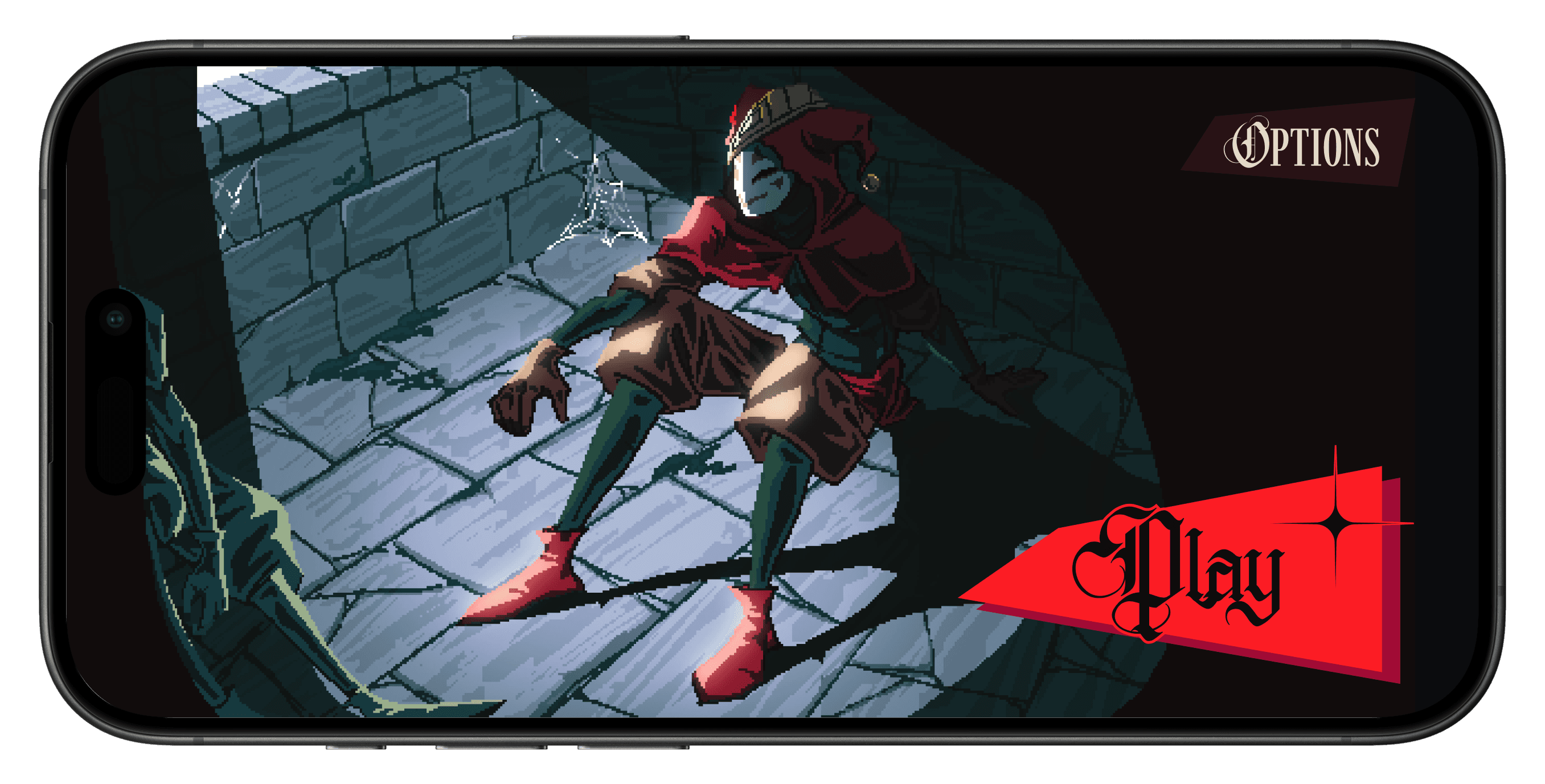
Set in a fictional medieval world, the game runs on dry humour and moderate difficulty: court jesters competing for the approval of a cruel king. In the single-level MVP, that comes down to a platform race through a dungeon, where players have to escape without falling into the lava.
MoSCoW
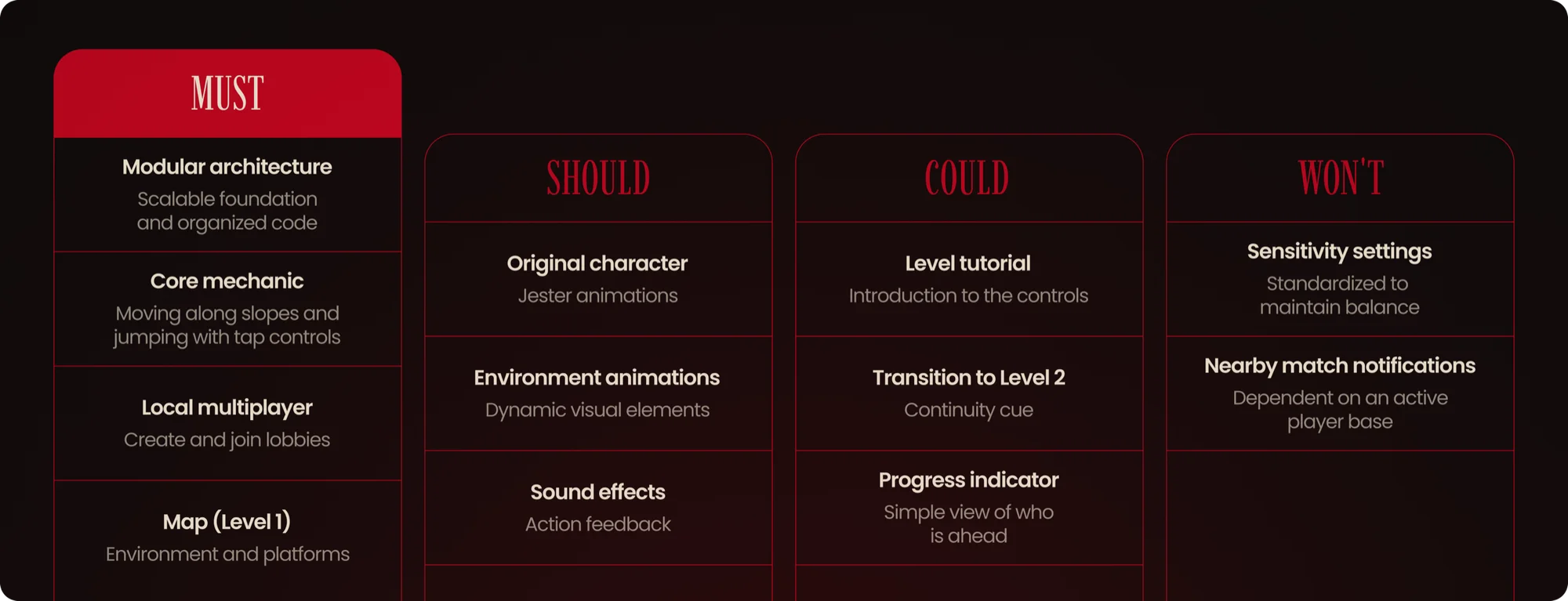
With only two months left before launch, we used MoSCoW to prioritise technical and feasibility requirements, focusing on validating the technologies the game depended on.
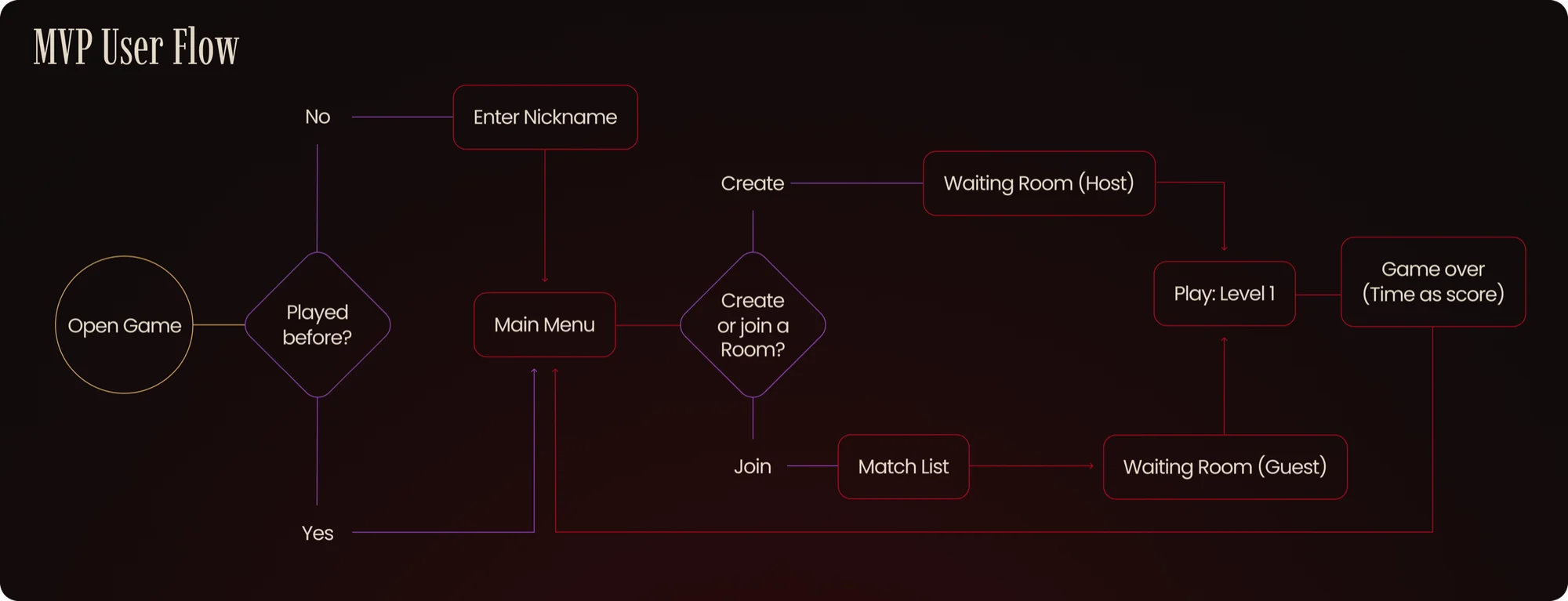
Flow architecture
Below are the main options and states in the first version's flow.
Validating the MVP
Testing in a controlled setting
After launch we ran controlled tests with two groups of four to eight players, aimed at validating local multiplayer and the core mechanic. Participants matched the audience we had defined up front: 14 to 30 year olds, with a range of familiarity with games.
6 out of every 10 struggled to adapt to the mechanic.
Every one of them had no prior familiarity with games.
Every participant who considered themselves a gamer rated the experience as satisfying.
Both the difficulty of the level and the overall experience scored well with that group.
The results pointed to the game engaging people who already play, who were noticeably keener to go again. On the back of that, we decided to take the game to a gaming event, to test the hypothesis at scale in a setting much closer to that audience.
Testing in the real world
The large-scale testing ran across three days at a gaming event. In that time, more than 600 rounds were played. To drive engagement and watch competitive behaviour up close, we ran a competition with prizes, which drew a strong turnout and a lot of people replaying unprompted.
- •
The game drives not just competition but the urge to beat your own record, with players chasing better times
- •
Most of the audience plays with friends remotely, and reported rarely meeting up in person to play
- •
Even among people who are not regular mobile players, most found the mechanic fun and said they would play again
- •
Over half the interested players were on Android — a critical platform gap for a product that was still iOS-only
Where the hypotheses broke
The testing confirmed some of what we had assumed, and forced us to rewrite the rest from how the product actually got used.
❌ The game would appeal to a broad, varied audience
Engagement was significantly higher among people already familiar with games.
✅ The motion-based mechanic would land as a pleasant surprise
People read it as fun and genuinely different, including those who do not usually play on their phones.
❌ Local multiplayer would be the differentiator and the product's story
In practice, requiring everyone to be in the same room limited use and cut down the chances to play at all.
✅ The game would drive social interaction and engagement between friends
The social side did matter, but players said they would rather play with friends at a distance.
Turning the product around
The validation data exposed limits in the original audience, in the multiplayer model, and in how far the game could scale technically. From there, I led a strategic turn for the product, aimed at widening its reach, creating more chances to play, and opening room to grow.
Strategic decisions
What we learned in testing drove structural changes to the product's direction.
Higher engagement among experienced players → a sharper audience
The audience stopped being everyone and became someone specific.
New target audience: teenagers and adults, 14 to 30, already familiar with digital games and drawn to competitive experiences.
Beating your own record as the motivator → a single-player mode
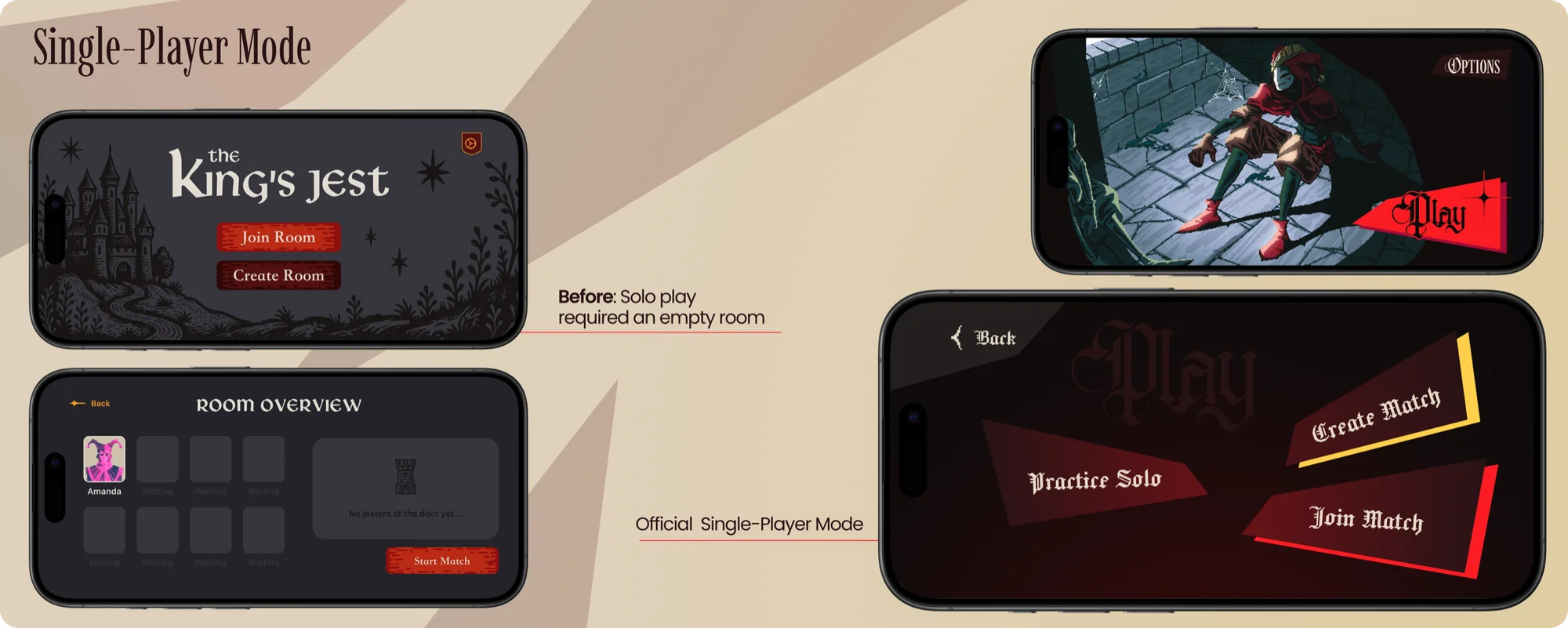
Plenty of players were creating rooms just to play alone, chasing their own best times.
That led to a practice mode, built around solo play and fast replays.
Being in the same room as a barrier → a new multiplayer model
Local multiplayer narrowed the chances to play and did not match how the audience behaved — they told us they would rather play at a distance.
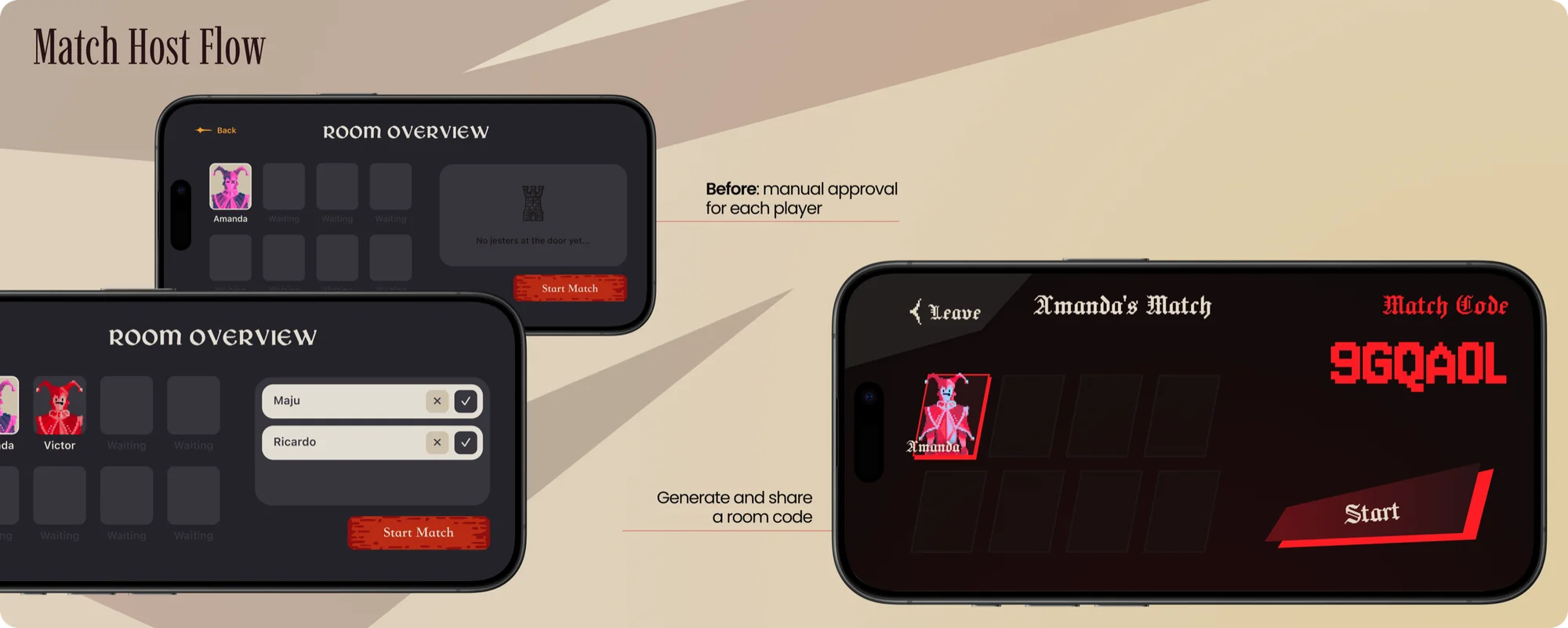
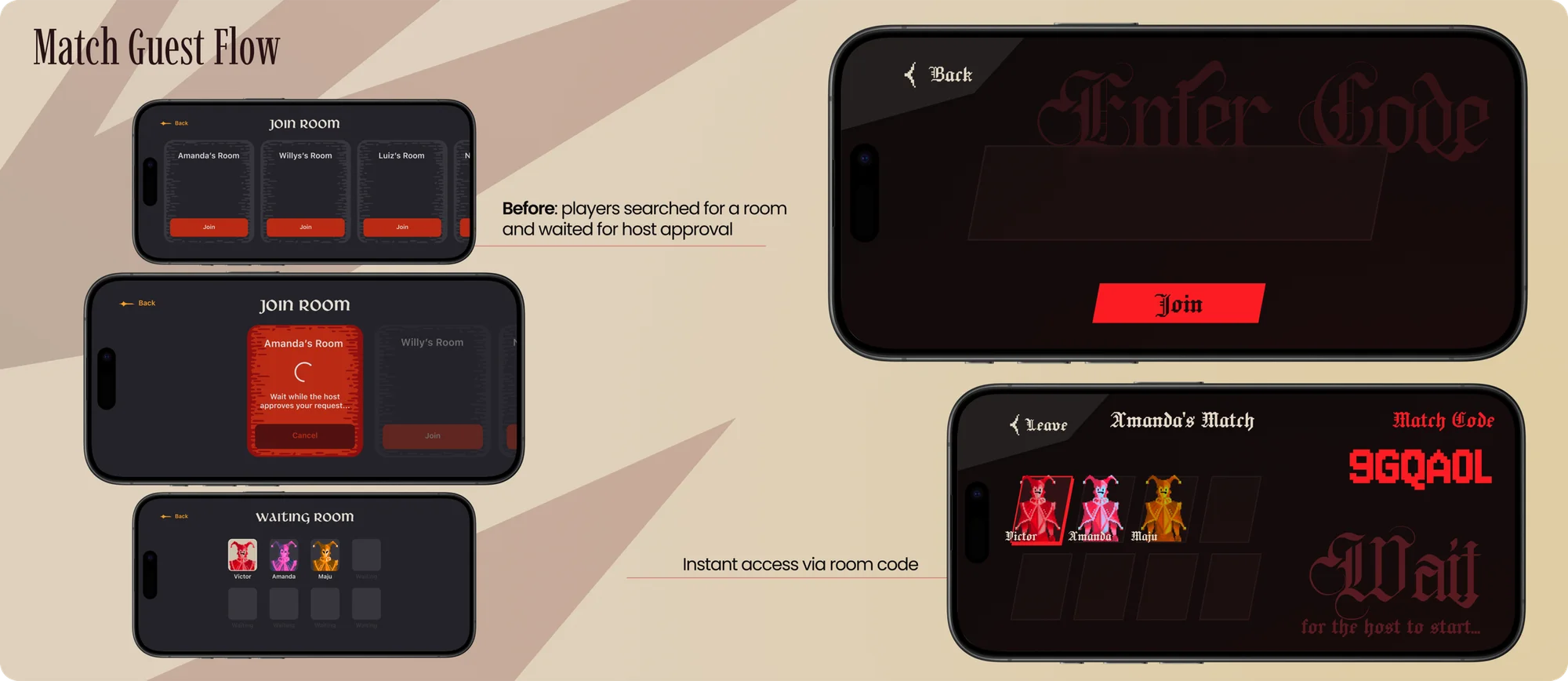
The call was to move from local to online multiplayer, so people could play far more often.
An Android-heavy audience → rebuilding the product
The concentration of Android users made the iOS-only build an obvious ceiling on reach.
We chose to rebuild the game from scratch in Unity, which made cross-platform support possible and gave us a more flexible base to keep building on.
Rebuilding the experience
The technical rebuild made room to redesign the experience end to end. The game's flow was restructured around:
- •
The new platform (Unity) and what it made technically possible
- •
The new online multiplayer model, built for stability and scale
- •
The practice (single-player) mode, answering behaviour we had already observed
- •
An experience architecture ready for multiple levels, progression, and future expansion
Final results
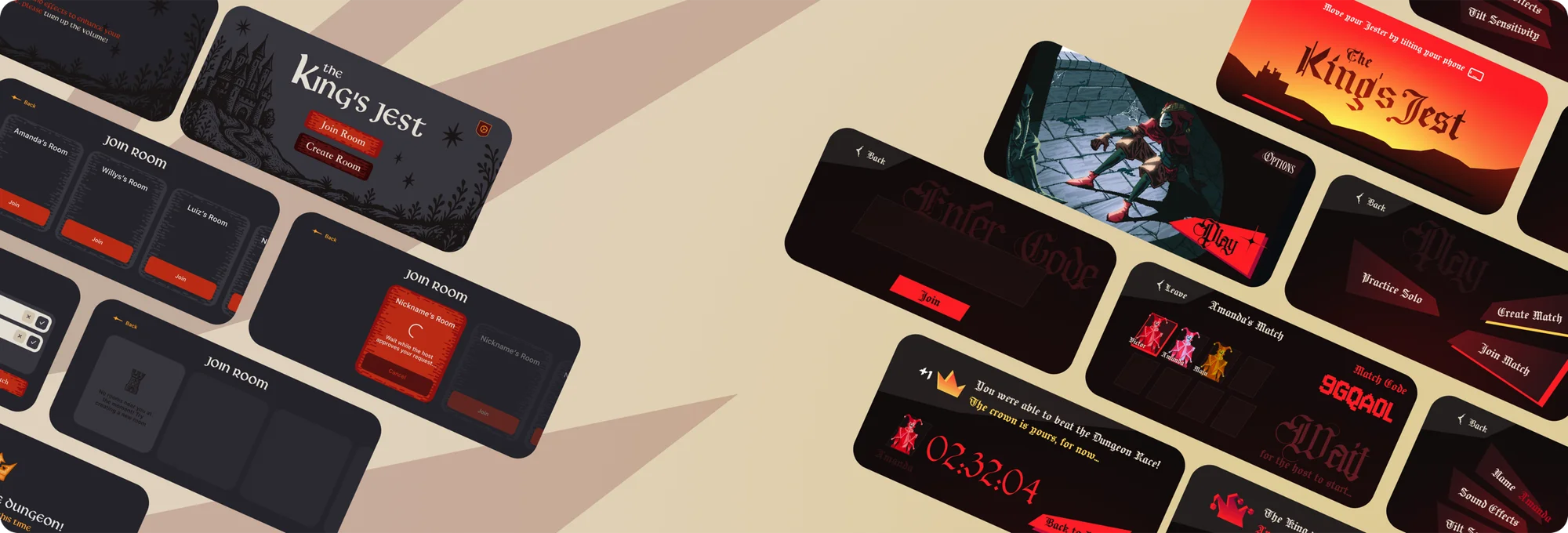
With the game being rebuilt anyway, we matured the visual identity and reworked every screen to match the new flow, accounting for the move to Unity, online multiplayer, and the new single-player mode.
The behaviour we had observed — players beating their own records — was turned into a way to play.
Metrics and telemetry
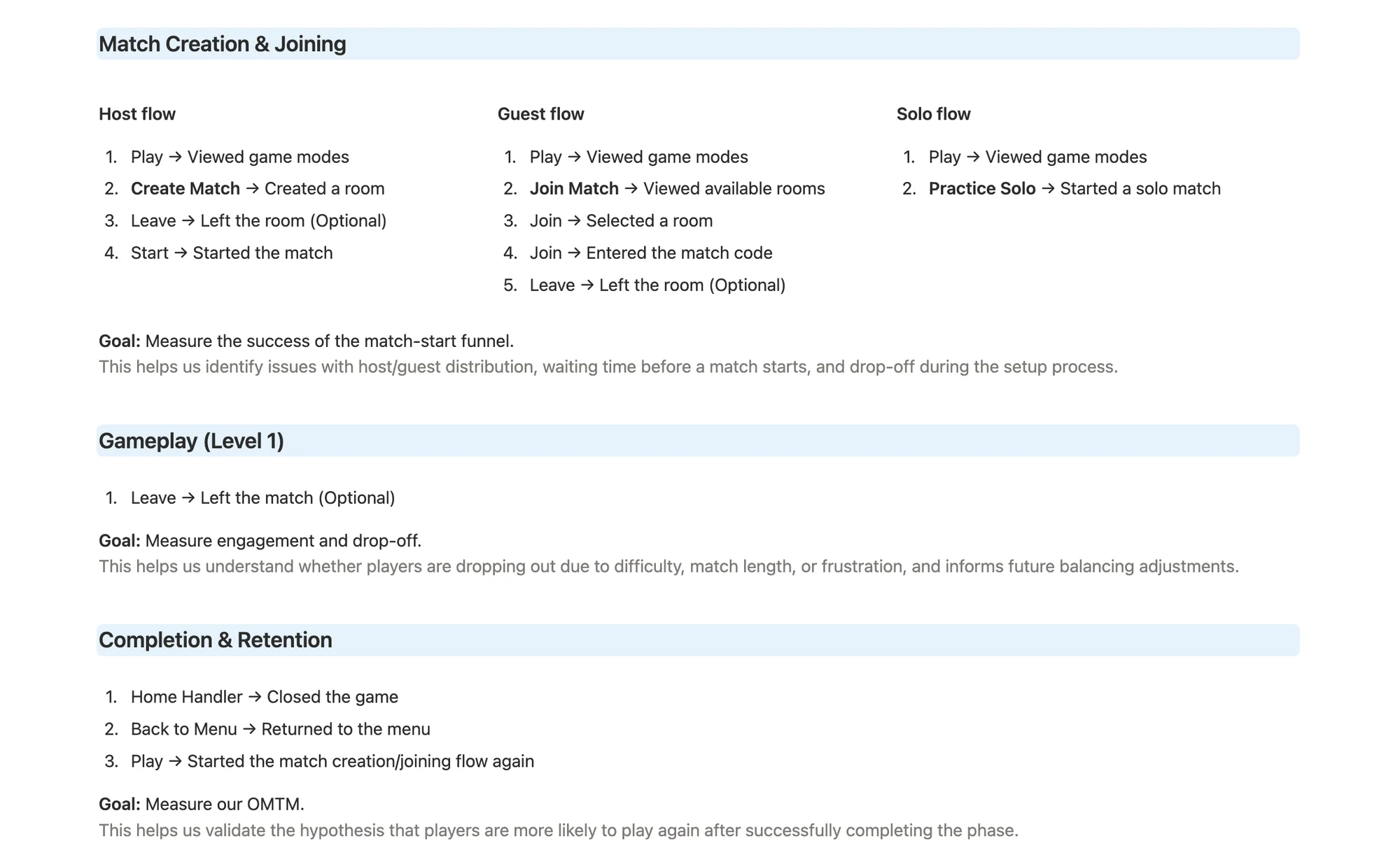
We set up the product's analytics foundation — north star metric, OMTM, and events — making quantitative testing and metric-led iteration possible from here on.
- •
North Star Metric (NSM): daily play time per active user
It reflects how much continuous value the game delivers to players.
- •
One Metric That Matters (OMTM): completed round rate
Players who finish rounds spend longer playing and are more likely to come back.
With no monetisation model in place, the focus is on understanding how long players spend inside matches, since that time is a direct signal of engagement.
Closing reflections
Building an entertainment product put the whole team on unfamiliar ground. The goal was not to solve a direct pain, but to create something different, fun, and worth remembering.
It became clear that thinking about a game runs on a different logic than utility products. The decisions go past efficiency and usability into engagement, surprise, and whether anyone wants to play again. For all that complexity, it is what made this project so enjoyable to build.
I worked mainly on the strategic layer of the product, moving between the designer and product manager roles. Over the course of it, I confirmed both my interest in and my aptitude for work that calls for product vision, organisation, and constant communication.
“The King's Jest is available, with everything described in this case, on iOS and Android.”